Chaos And Music...
From the original Analog Industries archive. Some links and images from that era no longer resolve.
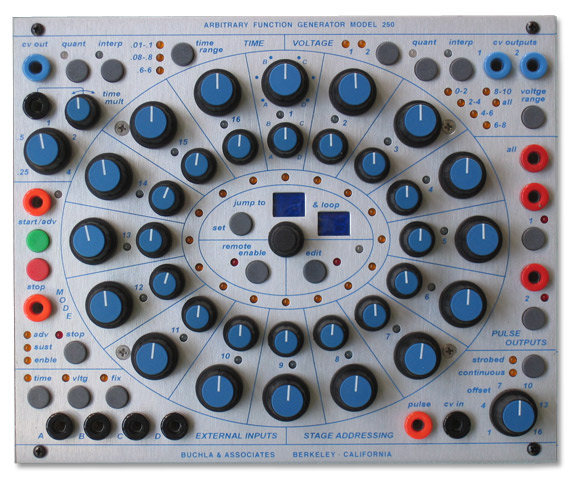
I’ve been thinking a lot about chaos lately, as it relates to music creation. Watching the Olympics nightly, I’ve noticed one thing in particular about the speed events, such as downhill, combined, luge, skeleton: the guy that wins is the one that is willing to go right to the edge, and maybe stick a toe over. In the men’s downhill in particular, the fastest times were turned in not by the guys that skied a perfect line, but by the ones that exhibited more of a (barely) controlled fall down the side of the mountain.
This, of course, results in a lot of wrecks, but being careful and controlled aren’t necessarily desireable traits in someone that wants to go faster than everyone else. The same is true of music. Making safe music, or music that adheres to strict rules, is akin to making boring music. The most exiting music ever made is by musicians that stuck a toe over the edge. The Beatles may sound banal today, but that’s only due to the fact that their best records were oldies before most of us were born. Strawberry Fields is simply out of hand, and much more “alternative” and experimental than anything Coldplay has ever done. (Then again, most anything is, so maybe that’s a bad example.)
Anyways, to get back to the subject, I make no secret of the fact that I often use aleatoric generators to come up with melodies and rhythms. My favorite programs are M and UpBeat, both written by David Zicarelli before he founded Cycling ’74. I’ve released several songs that are almost entirely generated by those two programs. What I like about them, and aleatoric generators in general, is the fact that I can set the initial conditions, but the timing and order of notes is left up to the ghost in the machine, and while it takes patience to get something that people will find listenable, once I do, the result is never something I would have thought of on my own.
I’ve been pondering how to take pieces of these programs I like and put them in the (somewhat stricter) framework of the VST/AU environment. My thinking is that the more control one has over the source material and initial conditions, the more likely something interesting is going to come out. So imagine this: a synth/sequencer combination (think 303) except it has Buchla’s Arbitrary Function Generator (pictured above) instead of the typical Roland step-time fiasco, and a somewhat more sophisticated synth section. What would this need? What would it not need? 2 VCOs, for sure, and a multi-mode filter, all of which could be controlled by the sequencer. A randomizing section for the various bits. I like Buchla’s circular design above rather than the more linear x0x style. Something to think about, anyways.
Comments
Comments are closed on this post.