On Creativity...
From the original Analog Industries archive. Some links and images from that era no longer resolve.
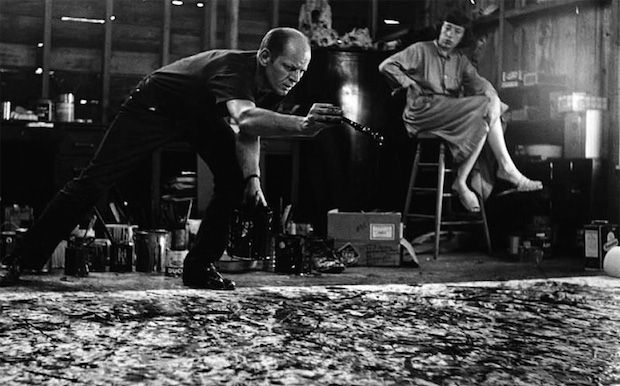
Long-time readers will know my fascination with the discussion of creativity, and its care and feeding; in point of fact, many of you come here specifically for that discussion when it rears its head, and not (evidence to the contrary) to make snarky comments about silly synth-nerd gear.
I’ve been at this (for values of “this” that equal working in the creative fields) for long enough now to recognize my own limitations and strengths vis-a-vis the creative energy, and in general, to know when I’m “in the mood” and can be productive, without having to go full Barton Fink. (There is a time and a place for that, though, it must be said.) In fact, my general impression of the matter is that I’m so good at recognizing that flow-state, or the beginnings of it, that I actually miss out on a lot of good ideas because I don’t bother even attempting a creative endeavor if I’m not “feeling it” or whatever. And I can trigger it at will with a couple simple methods, but I don’t feel that the flow-state that I purposefully trigger is as productive as one entered in to unwarranted, or even unwanted.
That’s my own personal opinion and experience. In this, as all things, your mileage may (and most likely will) vary.
The reason I put that picture of Jackson Pollack up top: he was one of those lucky son–of-bitches that was the recipient of the Bolt Of Lightning. The Mack Daddy of inspiration flow-states. One of those that changes everything. Whether you like his work or not is beside the point. There was before he made Full Fathom Five, and then there was everything after. His bolt was so powerful it touched other forms of art, and it’s not often we get a heavy cross-polination. That’s something to remark on.
Anyhow, on to the purpose of this post. In Slate this morning, they published a long-forgotten essay from Isaac Asimov entitled On Creativity. It is an excellent read, given in Asimov’s usual conversational style. The purpose of the essay is to provide a framework by which a group of scientists may do research for the government, but it easily translates to “band” or any of the other expression forms we’re familiar with. It is, it seems to me, largely concerned with control of the flow-state, mostly in the manner I do myself. I came about my method through trial and error, and it’s nice to see it codified and given credence by such a luminary.
If you know Jackson Pollock’s history, you’ll know that he didn’t really just happen on Full Fathom Five by accident. In much the same way as Asimov describes the Theory Of Evolution in the preamble to his essay, Pollock attended workshops with other experimental painters, and was actively searching for a new method of expression to convey to the world what was in his mind. He wasn’t gifted this method out of whole cloth; it was the result of taking in other people’s work, and talking to other people that were also actively searching for new methods of expression. In the same way, Sgt. Pepper’s didn’t just happen one day. It was the result of heavy competition, both within the Beatles, and with other bands of the day, like the Beach Boys, and actively searching with an open, experimental bent, for a new way of expressing old ideas, by a group of highly skilled musicians.
In short, a nice gift from beyond the grave Dr. Asimov left us today, and some food for thought. Comments? Criticism? Disagreement?
Comments
Comments are closed on this post.